
When the pandemic hit and people were cut off from the outside world, with limited mobility, I opened my notary office. As a Russian lawyer who has been working in the States for many years, I know how to effectively solve most problems remotely. Therefore, I decided to share my knowledge and experience with the people of New York and help them move forward, despite the objective difficulties that have arisen due to the coronavirus.

Russian pension in the UNITED STATES: problems in the Pension Fund and even with the mobile operator
My first client was Michael. He asked me to issue a certificate of survival in order to continue paying him a Russian pension. In previous years, he flew to Russia a couple of times a year and personally took the pension accrued to him. But because of the coronavirus, that has become impossible. He became the first person to whom I issued a certificate of the fact of being alive with an apostille and a notarized translation into Russian, everything is as it should be. I sent the original to the Pension Fund on Shabolovka, and uploaded the scan through my personal account on the Pension Fund website, indicating my e-mail for feedback.
Suddenly, I received a written refusal in response. According to the responsible officer of the Pension Fund, the certificate of the fact of being alive should be certified at the consulate and in no other way.
Being not only an American notary, but above all a Russian lawyer, I wrote a letter to the Pension Fund explaining the provisions of the Hague Convention of 1961. The pension fund went into reflection for a week, after which a short answer came to my e-mail: "The payment of the pension to your client has been restored."
Then Mikhail came to me with a question: how to get this very pension without a trip to Russia. I offered him a power of attorney under which our Moscow employees could receive his pension, and then I would pay it to him in our office in New York. But Mikhail, a former civil aviation pilot, is used to solving problems without resorting to anyone's help. As it later turned out, he has children living in America, but even to them he addresses minimally, despite their great desire to help his father. He likes to do everything himself. Therefore, he considered it unacceptable to receive his pension through proxies, because it implied a certain kind of dependence and continuing relationship. And Michael is an independent person.
Therefore, Mikhail asked me if it was possible to issue a Visa or Master Card to a retirement account in order to withdraw money in America through an ATM on my own. Such a card cannot be issued to a pension account, it can only be issued to an ordinary, classic account. At the same time, if there is a classic Visa card, the client can install the Sberbank application on his smartphone, which will reflect all his accounts, including the pension account, and online make a transfer of his pension from the pension account to the classic one, and already from this account withdraw money through an ATM.
But here, too, not everything is so simple and unambiguous. To have online access to your Sberbank accounts, you need a mobile phone with a Russian SIM card.
Through our office, Mikhail issued a power of attorney for the right to open an account in Sberbank and receive a SIM card from MegaFon. When we turned to MegaFon, we were informed that a sim card cannot be issued using a foreign passport (and Mikhail has only a foreign passport, there is no internal Russian passport). And they issued a written refusal with an offer to the client to come to Russia (yes, in the midst of the pandemic, at the age of 89).
I had already prepared to go to court, but my mother stopped me: "Why do you need a court? You explain it to them, they just don't understand." As in the case of the Pension Fund, I wrote explanations for MegaFon, indicating that a citizen of the Russian Federation living outside the Russian Federation is not at all obliged to have an internal passport; that the identity of a citizen living abroad is certified exclusively by a foreign passport, powers of attorney are issued on it and any of his rights in the territory of the Russian Federation are realized. But when and if he personally comes to Russia, then there will be an obligation to obtain an internal passport. I was immediately called back from the company "Megafon" – the employee confusedly asked what to do if their computer program contains columns only for the internal passport. I gave advice to change the program. That's a question for programmers, not lawyers, right? An hour later, I received a call from Megafon and was offered to come get a SIM card.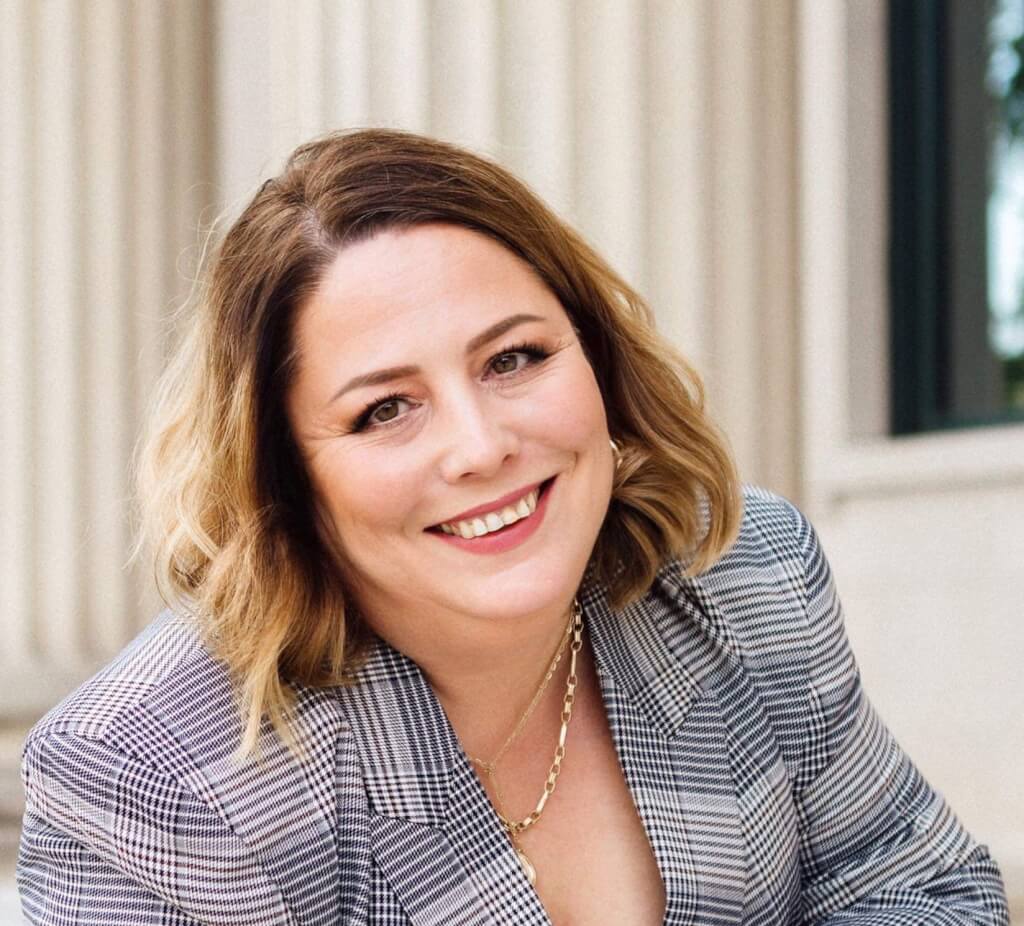
Karina Duvall. Photo from personal archive
After receiving the SIM card and checking its performance, we opened an account for Mikhail in Sberbank. It was a separate epic. And why does he need a bank card at the age of 89? And how is he going to use it? He is too old, he will be deceived… Our employee was persuaded, dissuaded, various arguments and considerations were given, but having exhausted all the possibilities of persuasion, they opened a bank account and issued a bank card to it.
It would seem that everything, the order was brilliantly executed, the courier delivered a bank card and a SIM card to New York, I gave them to a happy client. But that wasn't the case. A week later, I got a call: "Nothing works for me." First thought: "Sberbank employees were right, there is no need to torture an elderly person with new technologies….". "I want to come to you so that you can help me figure it out. When is it possible?" the client asked insistently.
He comes and hands me a SIM card: "Check, maybe your phone will work, I don't." I check – it really does not work, although I personally replenished the account, and the money there should be enough for the next six months. I send an employee in Moscow to deal with Megafon. MegaFon, reluctantly, issues a written refusal, dated two months earlier, which states that the SIM card was issued by them by mistake, and therefore now they block it.
Dig further to find out what the mistake is. It is said that there is no signature and seal of the official on the apostille. Are you serious? Realizing that he was wrong, Megafon was afraid to refuse openly and did it secretly, surreptitiously. Of course, both the signature and the seal on the apostille are there, the apostille is actually a document of the state sample, the form and content of which are established by the Hague Convention of 1961. When re-applying, they issued a new SIM card even without a fight, apologizing and citing a technical failure. Less than six months later, a person was able to receive his pension to his own bank account with the ability to withdraw money through an ATM.
Apostille is a stumbling block
It would seem that we live in the XXI century, when everyone is already experienced and educated and knows what an apostille is. And yet, no, no, yes, such wild unbridled unprofessionalism shoots.
There was another similar story. I was approached by a young medic. He was educated in Russia and wanted to continue it in New York. To do this, he needed to give permission to his medical university in the Russian Federation to transfer his transcripts to the American company ECE (Educational Credential Evaluators). At the request of the client, I issued him a notarial application to his Russian university, with an apostille and all the necessary formalities. However, a few days later, in complete confusion, he called me and said that the medical university had sent him, to put it mildly. No, not where you thought it would go, much further… To the consulship. For only the consulate, in the opinion of the medical university, has the right to certify such applications.
On the other hand, what is the demand from the medical university? It's not a law school… Each specialist in his field, and the educational department of the medical university clearly did not specialize in the field of jurisprudence. As a professional international lawyer, and as a notary who certified this document, I wrote an email to the university explaining the provisions of the Hague Convention.
That day, I was with my children in Washington, where I came because I am a student at Antonia Scalia Law School. We were on the road all day and as soon as we settled in the hotel, I decided to write a response to the medical university before going to bed, knowing that in the morning it would not be up to them. I wrote and fell asleep.
The moment I received the answer from the university, it was deep night in Washington and, fortunately, I did not immediately read the reply email and did not react to it. Sometimes it's better to keep quiet… The author of the first email accused me of incompetence, expressed his vision of processing documents abroad, stressing that many of their graduates go through this, and they have no problems when contacting the consulate. The second email of the same author came some half an hour later, where, in an apologetic tone, the interlocutor admitted that he was wrong, and promised to give my client the documents. There was also a third email, in which my respected interlocutor asked my permission to provide my contacts to his graduates, because it is impossible to get to russian consulates around the world, and problems need to be solved …
Such is the metamorphosis – from complete denial to recognition and the desire to cooperate. This kind man has sent my information to numerous Russian universities that refer their students to me. Now obtaining transcripts for submission to the ECE (Educational Credential Evaluators) has become easier and more accessible.
As a professional lawyer, a recognized expert in the field of private international law, I have issued thousands of powers of attorney and statements for my clients scattered around the world. I did it for free as part of a big and meaningful cause. With the onset of the pandemic, I suddenly realized that not everyone has large and significant cases in which the participation of an attorney is necessary. Most people need to solve small problems that they struggle to resolve on their own, but run up against either the lack of professionalism of those who offer them help with paperwork in America, or bureaucratic obstacles that are justified and unreasonable. These people don't have problems worth hundreds of thousands of dollars, but their little problems are no less relevant to them.
People want to sell and buy apartments, rent them out, open telephone lines, receive pensions, confirm the fact of being alive, continue studying abroad, issue powers of attorney to conduct court cases, enter into inheritance, issue permits for children to travel around the world, be removed from the registration register without the need to come to their homeland, as well as draw up any other legally significant documents, being abroad. And I decided to become closer to you, and help you in solving not only large and significant tasks, but also in solving small everyday affairs.
The material was prepared in partnership with
Karina Duval – notary, lawyer, expert in international law
web: karinaduvall.com
address: 1400 Ave Z, Office 507, Brooklyn, NY 11235
e-mail: karina.duvall@gmail.com
cell: +1-718 704 8558